
Courses Without NEET in India: 10 Healthcare Careers to Explore in 2026
Low NEET score? Didn’t appear for NEET? Your healthcare career may still have a path forward.
Courses without NEET in India can offer students alternative routes into healthcare and allied health careers when MBBS is not their chosen path or their NEET score does not meet their expectations. From nursing and physiotherapy to medical laboratory technology and pharmacy, several courses may be worth exploring. However, eligibility and entrance requirements vary by institution, course and state, so students should check the current admission rules before applying.
For many students, the NEET result feels like a turning point. You may have spent months preparing and imagined yourself working in a hospital. However, when the result does not match your expectations, it can be difficult to know what to do next.
Fortunately, healthcare is much broader than becoming a doctor.
Hospitals and healthcare organisations also need nurses, physiotherapists, laboratory professionals, imaging technologists, pharmacists and many other trained professionals. Together, these professionals support patient care, diagnosis, rehabilitation, treatment and hospital services.
Therefore, if you have completed Class 12 and are exploring alternatives to MBBS, this guide can help you understand:
- 10 healthcare courses you can explore
- Possible jobs after graduation
- Indicative salary ranges
- Recent healthcare hiring trends
- Why Bangalore may be worth considering
- How to choose a course based on your interests, eligibility and budget
Let us look at these options one by one.
Important: Admission requirements can differ by course, state, institution and academic year. Some colleges may require NEET-UG, while others may use merit or another entrance process. Therefore, always check the latest official admission rules before applying.
Is NEET the Only Way to Build a Healthcare Career?
No. NEET-UG is required for MBBS and certain other medical programmes. However, the wider healthcare sector includes many other qualifications and professions.
For example, students can explore nursing, physiotherapy, medical imaging, laboratory technology, respiratory care, optometry and pharmacy. Depending on the programme, admission may be based on Class 12 marks, a university entrance test, a state-level process or another selection method.
As a result, students who did not take NEET, or whose NEET score was lower than expected, may still have several options to explore.
For official information about NEET-UG, visit the National Testing Agency’s NEET website.
10 Healthcare Courses Worth Exploring
These courses lead to different kinds of work. Some focus mainly on patient care. Others, however, involve rehabilitation, diagnostic technology, laboratory science or medicines.
1. B.Sc Nursing — A Career Focused on Patient Care
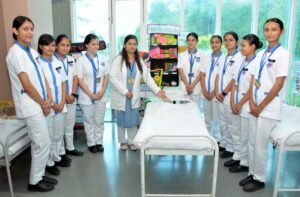
Nursing is one of the most important areas of healthcare. Nurses support patients before, during and after treatment. In addition, they work closely with doctors and other healthcare professionals.
What will you study?
Students usually learn patient care, anatomy, physiology, medical-surgical nursing, community health and clinical practice.
What jobs could you pursue?
- Staff Nurse
- Nursing Officer, where eligible
- Critical-care or speciality nursing roles after relevant training
- Community-health nursing roles
- Further study and specialised nursing pathways
Indicative salary
Some entry-level private-sector roles may offer around ₹2.4–4.8 lakh per year. However, actual salaries depend on the employer, location, experience, shift pattern and qualification.
Why consider nursing?
Nursing offers direct patient interaction and a broad range of work settings. Moreover, students may later move into specialised areas through further training.
You may enjoy this course if: you are patient, caring, observant and comfortable with clinical responsibilities.
Admission reminder: Check the current admission route and verify the institution with the Indian Nursing Council.
2. Bachelor of Physiotherapy (BPT) — Help People Move and Recover
Physiotherapy focuses on movement, rehabilitation and physical recovery.
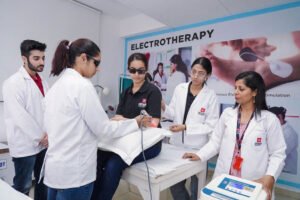
For example, patients recovering from surgery, injury or illness may need structured rehabilitation to regain strength and mobility. Physiotherapists help support that process.
What will you study?
Common subjects include anatomy, physiology, exercise therapy, movement science and rehabilitation techniques.
What jobs could you pursue?
- Physiotherapist, subject to applicable requirements
- Rehabilitation-centre roles
- Hospital physiotherapy roles
- Sports rehabilitation roles
- Further study in specialised physiotherapy areas
Indicative salary
Some early-career roles may offer around ₹2.0–4.0 lakh per year. Nevertheless, pay can change depending on experience, location and specialisation.
Why consider physiotherapy?
This course may suit students who enjoy anatomy, exercise and helping people improve physical function.
You may enjoy this course if: you prefer hands-on rehabilitation work and regular patient interaction.
3. Radiology and Medical Imaging Technology — Work With Diagnostic Technology
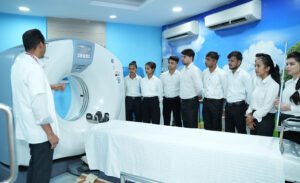
Medical imaging plays an important role in diagnosis. Therefore, trained imaging professionals are needed to support X-ray, CT, MRI and other imaging services.
What will you study?
You may study imaging principles, patient positioning, radiation safety, equipment operation and clinical procedures.
What jobs could you pursue?
- Radiology or imaging technologist
- X-ray technologist
- CT or MRI technologist after appropriate training
- Imaging-department technical support roles
Indicative salary
Entry-level roles may offer around ₹2.0–4.2 lakh per year. In addition, specialised equipment experience may improve future opportunities.
Why consider this course?
It combines healthcare and technology. Therefore, students who enjoy technical work may find it especially interesting.
You may enjoy this course if: you are detail-oriented and interested in diagnostic equipment.
4. Medical Laboratory Technology (MLT) — Turn Samples Into Useful Information
Laboratory testing supports diagnosis, disease monitoring and treatment decisions. As a result, trained laboratory professionals are an important part of modern healthcare.

What will you study?
Students may study clinical biochemistry, microbiology, haematology, sample handling, laboratory safety and quality procedures.
What jobs could you pursue?
- Medical laboratory technician or technologist
- Diagnostic laboratory roles
- Laboratory quality-control support
- Sample-processing roles
- Research-support pathways after further study
Indicative salary
Some early-career roles may offer around ₹2.0–3.6 lakh per year. However, salary depends heavily on the laboratory, city and level of experience.
Why consider MLT?
MLT may suit students who enjoy science, testing and accurate laboratory work. Moreover, it can be attractive to those who prefer technical work over constant patient interaction.
You may enjoy this course if: you like biology, analysis and laboratory procedures.
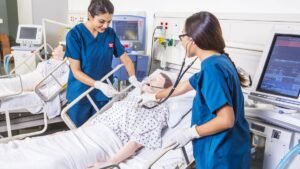
5. Respiratory Therapy — Support Patients With Breathing Problems
Respiratory-care professionals support patients with breathing-related conditions. In addition, they may work with respiratory equipment and support critical-care teams.
What will you study?
You may learn respiratory assessment, cardiopulmonary science, oxygen therapy, respiratory equipment and ventilatory support.
What jobs could you pursue?
- Respiratory therapist, within the permitted scope
- Respiratory-care technical roles
- Support roles in pulmonary units
- Support roles in critical-care settings
Indicative salary
Some early-career roles may offer around ₹2.4–4.5 lakh per year. However, hospital type, clinical training and experience can change the final salary.
Why consider this course?
Respiratory care is a specialised clinical field. Therefore, it may suit students who are interested in physiology, patient monitoring and hospital technology.
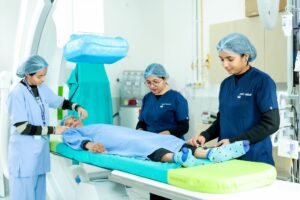
6. Cardiac Care Technology — Work With Heart-Care Services
Cardiac-care professionals support heart monitoring and diagnostic procedures. For instance, they may work with ECG, patient monitoring and other cardiac equipment.
What will you study?
Students may study cardiac anatomy, physiology, ECG, diagnostic equipment and supervised clinical procedures.
What jobs could you pursue?
- Cardiac-care technologist
- ECG technical roles
- Cardiac-monitoring roles
- Cardiology-department support positions
Indicative salary
Some entry-level roles may offer around ₹2.4–4.5 lakh per year. Moreover, additional training and equipment experience may support career growth.
Why consider this course?
It may suit students who want to work in a specialised area of healthcare and enjoy technical clinical work.
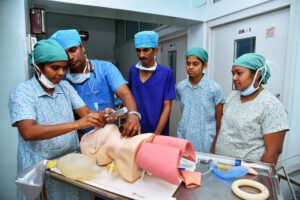
7. Anaesthesia Technology — Support Surgical Care
Surgical teams rely on careful preparation, equipment and monitoring. Therefore, anaesthesia technology is an important support area within hospital surgery departments.
What will you study?
Training may include anaesthesia equipment, patient monitoring, operating-room preparation and safety procedures.
What jobs could you pursue?
- Anaesthesia technologist
- Anaesthesia technical-support roles
- Perioperative support roles
- Further technical training
Indicative salary
Some early-career positions may offer around ₹2.2–4.2 lakh per year.
Why consider this course?
This field may suit students who are organised, careful and comfortable in a structured clinical environment.
However, Anaesthesia Technology is not the same as becoming an anaesthesiologist. Students should understand the exact professional scope before enrolling.
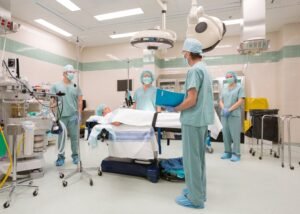
8. Operation Theatre Technology — Support the Surgical Environment
Operation theatres require preparation, sterilisation, equipment handling and infection control. Therefore, trained operation theatre professionals are part of the wider surgical team.
What will you study?
Students may learn theatre preparation, surgical instruments, sterilisation, infection prevention and equipment handling.
What jobs could you pursue?
- Operation theatre technologist
- Surgical-services technical support
- Sterilisation-related support roles
- Further study in healthcare technology
Indicative salary
Some early-career roles may offer around ₹2.0–4.0 lakh per year.
Why consider this course?
It may suit students who like practical work, structured processes and hospital environments.
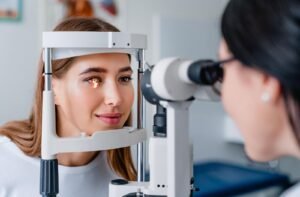
9. Optometry — Build a Career Around Vision Care
Optometry focuses on eyesight and vision care. In addition, optometrists may support patients through vision assessment and related services.
What will you study?
Subjects may include refraction, optical instruments, vision assessment, eye-care principles and patient communication.
What jobs could you pursue?
- Optometrist, subject to applicable requirements
- Vision-care centre roles
- Optical practice roles
- Eye-hospital roles
- Further specialised training
Indicative salary
Some early-career roles may offer around ₹2.0–4.0 lakh per year.
Why consider optometry?
This field combines patient interaction with technical vision assessment. Therefore, it can suit students who enjoy detailed work and eye care.
10. Bachelor of Pharmacy (B.Pharm) — Explore Medicines and Pharmaceutical Science
Pharmacy connects medicines, healthcare and pharmaceutical science.
Moreover, B.Pharm graduates may explore careers not only in pharmacy practice but also in manufacturing, quality control, regulatory affairs and other industry areas.

What will you study?
Common subjects include pharmaceutics, pharmaceutical chemistry, pharmacology, pharmacognosy and pharmacy practice.
What jobs could you pursue?
- Pharmacist, subject to registration requirements
- Pharmaceutical production roles
- Quality-control and quality-assurance roles
- Regulatory-affairs support
- Pharmaceutical sales and related roles
- Further study, including M.Pharm
Indicative salary
Some entry-level roles may offer around ₹2.0–4.2 lakh per year. However, pay can vary greatly between pharmacy practice and pharmaceutical-industry roles.
Why consider pharmacy?
It may suit students who enjoy chemistry, medicines and the science behind pharmaceutical products.
For regulatory information, visit the Pharmacy Council of India.
Quick Comparison: Which Course Matches Your Interest?
| Your interest | Course to explore |
|---|---|
| Direct patient care | B.Sc Nursing |
| Rehabilitation and movement | BPT |
| Imaging technology | Radiology & Medical Imaging |
| Laboratory science | Medical Laboratory Technology |
| Breathing-related care | Respiratory Therapy |
| Heart monitoring | Cardiac Care Technology |
| Surgical support | Anaesthesia Technology |
| Operation theatre work | Operation Theatre Technology |
| Vision care | Optometry |
| Medicines and pharma | B.Pharm |
Is Healthcare Hiring Growing in India?
Recent employer surveys provide useful signals.
For example, TeamLease EdTech reported healthcare and pharmaceutical hiring intent of:
| Period | Hiring intent |
|---|---|
| July–December 2024 | 47% |
| January–June 2025 | 52% |
In other words, the reported hiring intent increased by 5 percentage points between the two periods.
However, this does not mean 52% of graduates received jobs. Instead, it reflects the share of surveyed employers who said they planned to hire.
Sources: Economic Times and Express Healthcare.
Why Bangalore Can Be a Smart Place to Explore Healthcare Opportunities
Bangalore offers more than colleges. It also has a large healthcare, diagnostic, biotechnology and technology ecosystem.
As a result, students studying in the city may have more opportunities to explore hospitals, laboratories, healthcare companies and internships.
1. Strong hospital ecosystem
Bangalore has many hospitals and specialised healthcare facilities.
Therefore, students studying nursing, physiotherapy, respiratory therapy, cardiac care, anaesthesia technology and operation theatre technology may benefit from being in a city with varied clinical environments.
However, location alone does not guarantee practical exposure. Students should always check the college’s actual clinical-training arrangements.
2. Diagnostic and imaging opportunities
The city also has hospitals and diagnostic centres offering laboratory and imaging services.
Consequently, students studying MLT or Radiology may have access to a wider range of employers to investigate after graduation.
Again, students should ask colleges about formal clinical tie-ups, equipment and training facilities.
3. Biotechnology and health-tech ecosystem
Bangalore is also known for biotechnology, medical devices, diagnostics and digital health.
Therefore, students from pharmacy, laboratory technology and related healthcare fields may find the city’s broader ecosystem useful for future career exploration.
The Biotechnology Industry Research Assistance Council publishes information on India’s biotechnology sector and startup ecosystem.
4. More exposure to different employers
A larger healthcare market may give students more opportunities to understand different types of work.
For example, a student may explore:
- Hospitals
- Diagnostic centres
- Rehabilitation centres
- Pharmacies
- Pharmaceutical companies
- Medical-device companies
- Health-tech firms
However, students should compare real job requirements before choosing a course.
5. Better career exposure does not mean guaranteed placement
Bangalore can provide exposure. Nevertheless, your qualification, skills, practical experience and college quality still matter.
Therefore, before joining a college, ask:
- Where will I complete clinical training?
- Does the college have formal hospital partnerships?
- Is internship included?
- What practical facilities are available?
- What were the recent placements for this exact course?
- How many students were actually placed?
- What was the typical salary range?
- What is the total course and living cost?
How Should You Choose the Right Course?
Do not choose a course only because someone says it has “high demand.”
Instead, ask yourself three simple questions.
1. What kind of work do I enjoy?
If you enjoy patient interaction, Nursing or Physiotherapy may suit you.
On the other hand, if you prefer technology, Radiology or Cardiac Care may be more interesting.
Similarly, students who enjoy laboratory science may prefer MLT, while students interested in medicines may consider Pharmacy.
2. What work environment suits me?
Some roles involve hospital shifts and direct patient care.
Others involve laboratories, diagnostic centres or pharmaceutical workplaces.
Therefore, understanding the work environment is just as important as looking at salary.
3. What are my long-term goals?
Think beyond your first job.
For example, you may later want to pursue postgraduate education, specialisation, management, research or another healthcare field.
As a result, choose a course that gives you a path you can see yourself following for several years.
Before You Pay Any Admission Fee, Check These 10 Things
- Class 12 subject requirements
- Minimum marks
- Entrance or NEET requirement
- Current counselling process
- Course recognition
- Complete fee structure
- Clinical training facilities
- Internship details
- Placement data for the exact course
- Refund and cancellation policy
Most importantly, ask for important information in writing.
Frequently Asked Questions
Can I study a healthcare course if my NEET score is low?
Yes, you may still have options to explore. However, eligibility depends on the course and institution.
Can I apply if I did not appear for NEET?
Some healthcare courses may have admission routes other than NEET. Therefore, check the exact admission rules before applying.
Which course offers the best salary?
There is no single course that guarantees the highest salary. Instead, salary depends on your role, skills, employer, location and experience.
Are jobs guaranteed?
No. A degree does not guarantee employment. However, choosing a recognised course, gaining practical skills and studying in a strong healthcare environment may improve your opportunities.
Is Bangalore good for healthcare students?
Bangalore has hospitals, diagnostic centres and a wider healthcare and life-sciences ecosystem. Therefore, it may be a useful city to explore, provided you choose the right college and course.
Courses Without NEET in India: 10 Healthcare Careers to Explore in 2026
A NEET score can affect one admission route. However, it does not define every healthcare career available to you.
Nursing, physiotherapy, medical imaging, laboratory technology, respiratory care, cardiac care, anaesthesia technology, operation theatre technology, optometry and pharmacy all lead to different professional paths.
Therefore, do not choose in a hurry.
Explore the work. Compare the courses. Check the admission rules. Understand the costs. Then choose the path that fits you.
Need Help Exploring Healthcare Courses in Bangalore?
Admission Mantra Private Limited provides admission guidance in Bangalore for students exploring healthcare and other educational opportunities.
Students and parents can discuss their academic profile, preferred course, budget and college options before making a decision.
For more information, read our related guide:
NEET 2026 Medical Admission: Why Not You?
Admission Mantra Private Limited
Expert Admission Guidance in Bangalore