
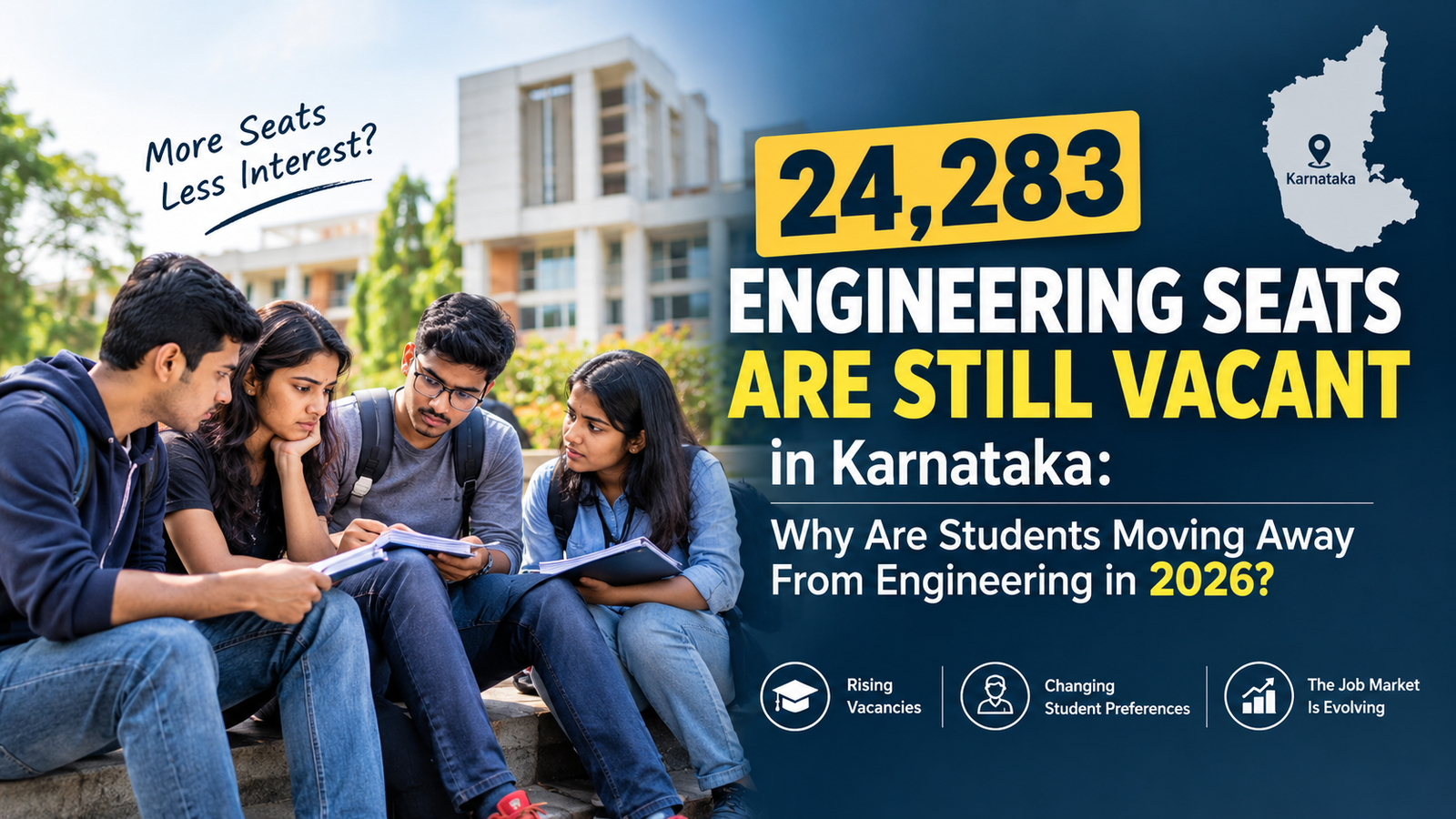
24,283 Engineering Seats Vacant in Karnataka 2026: Why Are More Seats Going Unfilled?
Karnataka engineering seats vacant 2026 has become an important concern for students and parents after 24,283 engineering seats remained unallotted following the final UGCET counselling process. The figure is significantly higher than the previous year, raising questions about seat expansion, student preferences, engineering branches and changing demand for higher education in Karnataka.
After the third and final round, 24,283 engineering seats remained unallotted and were handed over to colleges. Another 252 architecture seats also remained unallotted.
At first glance, the number raises an obvious question:
Are Karnataka students moving away from engineering?
The answer is not that simple.
The latest KEA data shows that Karnataka had significantly more engineering and architecture seats available in 2026 than in 2025. At the same time, the number of seats actually allotted was slightly lower. This means the rise in vacancies cannot be explained by increased seat capacity alone.
Let’s look at the numbers, understand what changed and what students should learn from the 2026 engineering admission trend.
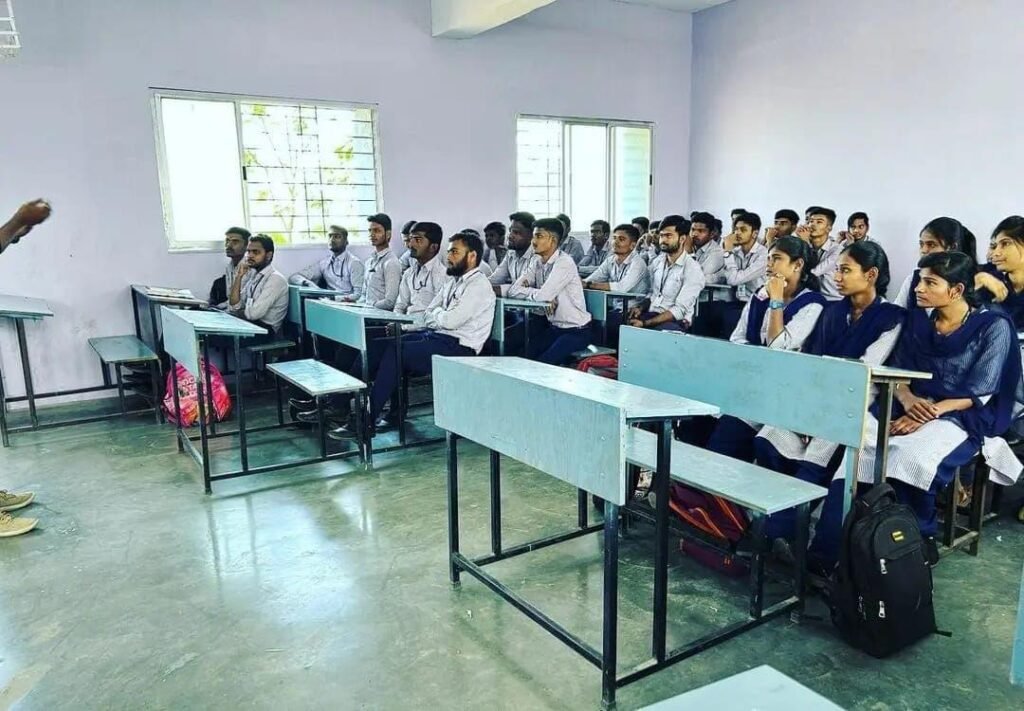
Karnataka Engineering Seats Vacant 2026: The Key Numbers
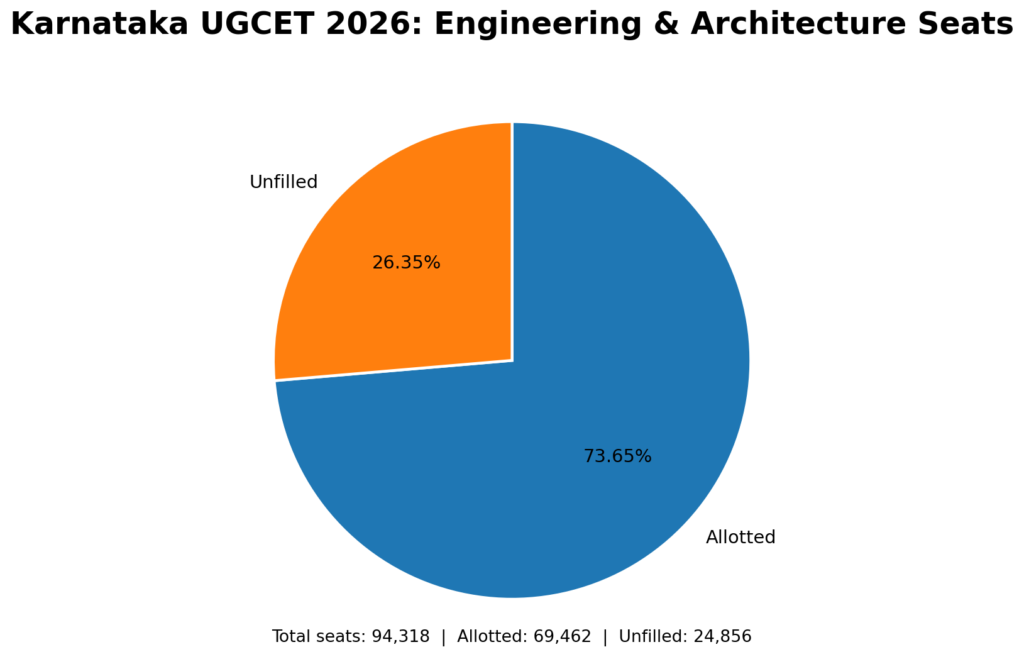
According to data shared by KEA, 94,318 engineering and architecture seats were available through UGCET in 2026.
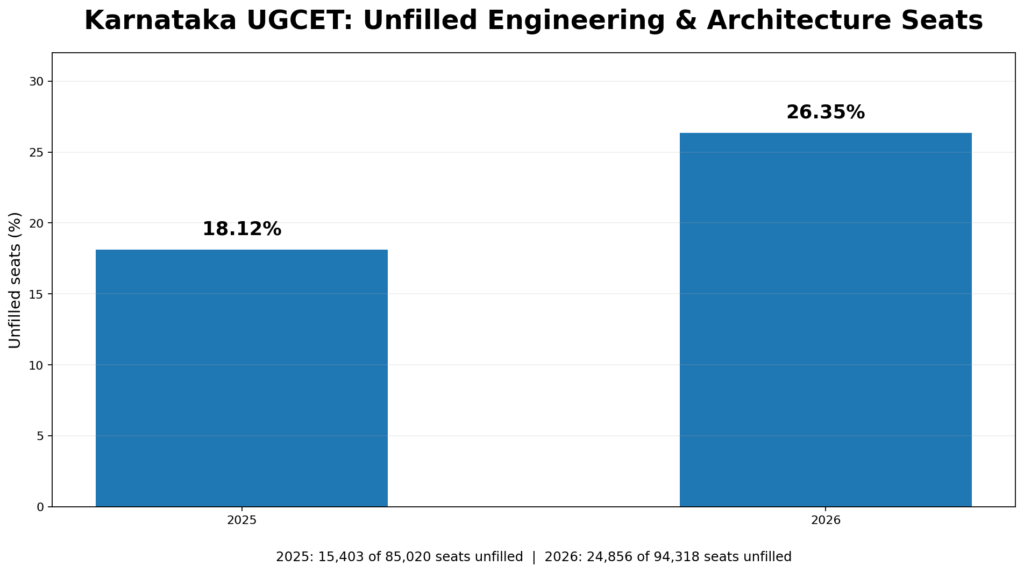
Of these, 24,856 seats remained unfilled, which represents 26.35% of the total seats. In 2025, 15,403 out of 85,020 engineering and architecture seats remained unfilled, representing 18.12%.
Here is the year-on-year comparison:
| Particulars | 2025 | 2026 |
|---|---|---|
| Engineering & Architecture seats | 85,020 | 94,318 |
| Seats allotted | 69,617 | 69,462 |
| Seats unallotted | 15,403 | 24,856 |
| Unfilled percentage | 18.12% | 26.35% |
| Increase in available seats | — | 9,298 |
| Change in allotted seats | — | -155 |
| Increase in unfilled seats | — | 9,453 |
The numbers tell an important story.
Karnataka added 9,298 more engineering and architecture seats in 2026, but the number of allotted seats actually fell by 155 compared with 2025. As a result, the number of unfilled seats increased by 9,453.
That is why simply saying “students don’t want engineering anymore” would be misleading.
24,283 vs 24,856: Why Are There Two Numbers?
Students searching for this news may see both 24,283 and 24,856 online.
There is a reason.
The September 10 report from The New Indian Express, based on the final UGCET engineering allotment, reported 24,283 unallotted engineering seats. It separately reported 252 vacant architecture seats.
A later analysis of KEA data reported the combined engineering and architecture figure as 24,856 unfilled seats.
Therefore:
- 24,283 = unallotted engineering seats
- 252 = unallotted architecture seats
- 24,856 = combined engineering + architecture figure
For an article specifically about engineering, 24,283 is the appropriate headline figure.
Did Students Stop Choosing Engineering?
Not exactly.
One of the most important facts from the 2026 counselling process is that engineering initially received a very strong response.
During the first UGCET allotment round, 90,748 of 91,724 engineering seats had been allotted, leaving only 976 seats vacant at that stage.
That means the final figure of 24,283 vacant engineering seats should not be interpreted as if students rejected engineering from the beginning of counselling.
The situation changed as counselling progressed.
This is an important distinction for students and parents:
Demand for engineering exists, but demand is not necessarily equal across every branch, college and location.
Why Did Engineering Vacancies Increase in Karnataka?
There is no single officially established reason for all the vacancies.
However, the latest reports and KEA data point to several factors.
1. Karnataka Added More Engineering Seats
The total number of engineering and architecture seats increased from 85,020 in 2025 to 94,318 in 2026.
That is an increase of 9,298 seats, or approximately 10.94%.
The Vice-Chancellor of Visvesvaraya Technological University (VTU), Dr S. Vidyashankar, also pointed to an increase in the number of engineering colleges, noting that at least 10 new engineering colleges were added in Karnataka during the year.
More colleges and more seats naturally increase the number of seats that need to be filled.
But the numbers show that increased capacity is not the entire explanation, because the number of allotted seats was also slightly lower than the previous year.
2. Students Are Becoming More Selective About Branches
Another important trend is that students are not treating every engineering branch equally.
Computer Science and related technology programmes continue to attract significant interest. At the same time, some traditional branches and institutions have faced greater difficulty filling seats.
The 2026 vacancy data gives an interesting picture.
Among engineering branches, reported unfilled seats included:
| Engineering branch | Unfilled seats |
|---|---|
| Computer Science | 4,635 |
| Electronics & Communication | 3,570 |
| Mechanical Engineering | 2,635 |
| Civil Engineering | 2,488 |
| Information Science & Engineering | 2,044 |
| Electrical & Electronics Engineering | 1,409 |
| Artificial Intelligence & Machine Learning | 1,014 |
| CSE – Data Science | 578 |
These figures are particularly interesting because they show that vacancies exist even in popular technology-related branches. However, the presence of vacancies does not mean these branches are unpopular overall. The total number of seats available in each branch also matters.
3. College Choice Matters
For many students, the question is no longer simply:
“Should I study engineering?”
It is:
“Which engineering branch, which college and at what fee?”
Students and parents increasingly compare:
- College reputation
- Placement record
- Branch
- Tuition fees
- Location
- Hostel expenses
- Internship opportunities
- Industry exposure
- Previous placement performance
This can result in seats remaining vacant at some colleges while seats in other colleges and branches remain highly competitive.
The 2026 Karnataka CET cutoff trends also showed continued demand for computer science and allied programmes, while interest in areas such as electronics was reported to be increasing.
4. The Job Market Is Changing
Engineering itself is not disappearing, but the skills expected from engineering graduates are changing.
Artificial intelligence, automation, semiconductor manufacturing, robotics, cloud computing, cybersecurity and data-driven technologies are changing the skills employers look for.
This is one reason students are increasingly asking about the career outcome of a particular branch, rather than choosing engineering only because it is a traditional professional degree.
The Karnataka government has also indicated that it is looking at demand-oriented curricula for engineering courses as industry requirements continue to change.
For students, this means that getting an engineering degree is only one part of the equation.
Skills, internships, projects, communication ability and practical experience can also matter significantly when entering the job market.
Engineering vs Other Professional Courses in Karnataka
The 2026 UGCET data becomes even more interesting when engineering is compared with other professional courses.
After the final allotment, KEA reported:
| Course | Total seats | Unfilled seats |
|---|---|---|
| Engineering | 24,283 unallotted | — |
| Architecture | 252 | 252 |
| B.Sc Nursing | 36,238 | 22,832 |
| Veterinary Science | 366 | 0 |
| Agriculture & allied courses | 4,211 | 20 |
| Pharmacy | 4,024 | 489 |
| BPT | 2,038 | 22 |
| Yoga & Naturopathy | 520 | 214 |
| B.Sc Allied Health Sciences | 7,236 | 2,465 |
The engineering figure above is the specific 24,283 unallotted engineering seats reported after the final round. The other course figures are from KEA’s final allotment data.
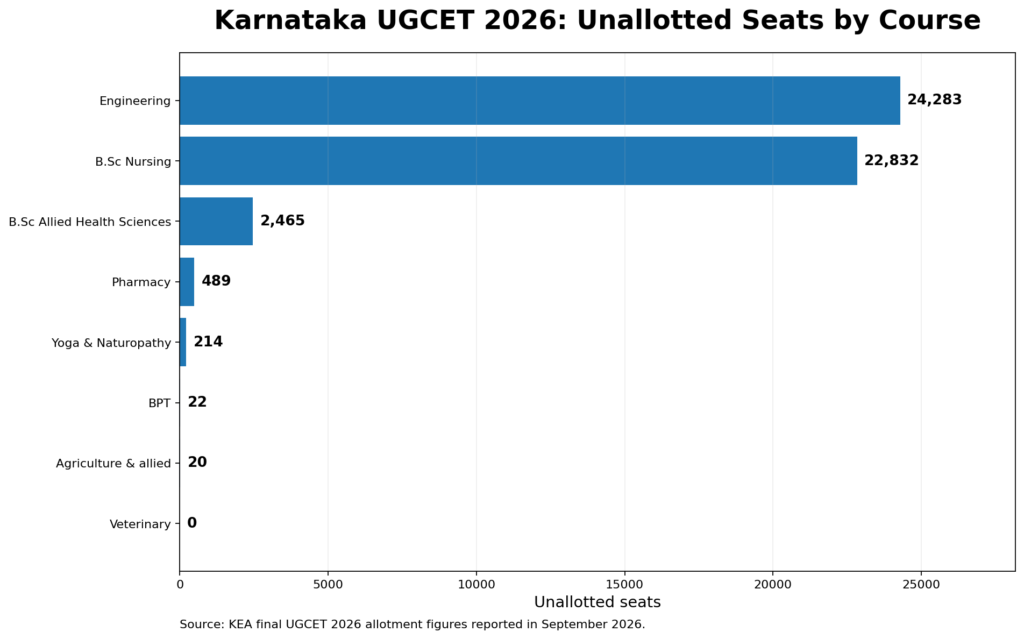
One of the biggest surprises is veterinary education.
All 366 veterinary seats were allotted, leaving zero vacancies. Agriculture and allied courses also had only 20 unfilled seats out of 4,211, which is less than 0.5% of the available seats.
This does not prove that engineering students are directly switching to veterinary or agriculture.
However, it does show that demand for professional education in Karnataka is not moving in one direction.
Veterinary and Agriculture Courses Show a Different Trend
According to KEA data reported by The Times of India, agriculture and farm-science courses saw vacancies fall from 243 seats in 2025, or about 7.1%, to only 20 seats in 2026.
Veterinary science recorded zero vacancies for the second consecutive year.
BPT also showed stronger demand.
The number of vacant BPT seats fell to 22 in 2026, equivalent to about 1.1% of the available seats. Pharmacy vacancies also declined, although 489 seats remained unfilled.
For students, the lesson is simple:
Engineering is not the only professional career route available after PUC.
Students should compare courses based on their interests, eligibility, fees, career opportunities and long-term goals.
You can also explore our guide on courses in demand in India in 2026 for a broader look at emerging career options.
Was Engineering Actually in Demand in 2026?
Yes.
The first-round numbers make that clear.
Out of 91,724 engineering seats, 90,748 were allotted in the first round, leaving only 976 vacant seats at that point. That means approximately 98.94% of the seats had been allotted in the first round.
So the final vacancy figure needs context.
The 2026 counselling process demonstrates that:
Initial demand was strong, but final seat retention/allotment across the entire engineering seat pool was much lower after subsequent rounds.
That is very different from saying that Karnataka students have completely lost interest in engineering.
What Does This Mean for Students?
If you are a KCET/UGCET student, the most important takeaway is not that engineering is “finished.”
Instead, students should become more careful about which engineering option they choose.
Before accepting a seat, check:
1. Branch
Understand what you will actually study for four years.
CSE, ISE, ECE, Mechanical, Civil, Electrical, AI/ML and Data Science have different curricula and career paths.
2. College
Do not select a college only because its name appears in a counselling list.
Check accreditation, faculty, infrastructure, placement history, internship opportunities and student feedback.
3. Fees
Compare the total cost of education, including tuition, hostel, transport, food and other expenses.
A course with a lower fee can sometimes have a very different financial outcome from a high-fee option.
4. Placements
Look beyond a single “highest package” figure.
Students should examine:
- Number of students placed
- Median or average salary where available
- Major recruiting companies
- Branch-wise placement information
- Internship opportunities
5. Skills
An engineering degree alone does not guarantee a particular salary or job.
Students should consider developing practical skills alongside their degree.
For example:
- Programming
- Data analysis
- Cloud computing
- AI/ML
- Cybersecurity
- Communication
- Problem-solving
- Industry projects
You can also read our guide on skill-based vs traditional degrees in India to understand why skills are becoming increasingly important in higher education.
Is Engineering Still a Good Career Option in Karnataka?
There is no single answer for every student.
The 2026 vacancy data should not be interpreted as proof that engineering has stopped being a valuable career option.
At the same time, students should not choose engineering automatically simply because it has traditionally been considered a popular professional degree.
The better question is:
Does the branch, college and career path match the student’s interests, abilities and long-term goals?
Engineering continues to have opportunities across technology, electronics, manufacturing, infrastructure, energy, automation and other sectors. But the value of the degree can depend heavily on the branch, institution, skills and experience a student develops.
What the 2026 Karnataka Data Really Tells Us
The biggest takeaway from Karnataka’s 2026 UGCET data is not simply that 24,283 engineering seats are vacant.
The bigger story is the gap between available capacity and actual demand.
In 2026:
- Engineering and architecture seats increased to 94,318.
- 24,856 engineering and architecture seats remained unfilled.
- The unfilled rate increased to 26.35% from 18.12% in 2025.
- Available seats increased by 9,298.
- Allotted seats actually decreased by 155.
- Unfilled seats increased by 9,453.
- Veterinary science had zero vacant seats.
- Agriculture and allied courses had only 20 vacant seats.
- BPT had only 22 vacant seats.
- Engineering demand was still very strong during the first UGCET round, when 90,748 of 91,724 seats were allotted.
These numbers suggest that Karnataka’s higher-education market is changing.
Students are not necessarily rejecting professional education. Instead, they are making increasingly specific choices about course, branch, college, cost and career prospects.
That is the trend students and parents should pay attention to.
Frequently Asked Questions
How many engineering seats are vacant in Karnataka in 2026?
After the third and final UGCET allotment round, 24,283 engineering seats remained unallotted in Karnataka. An additional 252 architecture seats remained vacant.
How many engineering and architecture seats were vacant in Karnataka in 2026?
KEA data reported after the final counselling round showed 24,856 unfilled engineering and architecture seats out of 94,318, equivalent to 26.35%.
How many engineering seats were vacant in Karnataka in 2025?
In 2025, 15,403 out of 85,020 engineering and architecture seats remained unallotted, giving an unfilled rate of 18.12%.
Are Karnataka students no longer interested in engineering?
The available data does not support such a broad conclusion. Engineering received a very strong response in the first UGCET round, when 90,748 of 91,724 seats were allotted. The final vacancy figure reflects the complete counselling process and the increased number of available seats.
Which professional courses had very few vacant seats in Karnataka in 2026?
According to the reported final KEA data, all 366 veterinary seats were allotted, while only 20 agriculture and allied-course seats and 22 BPT seats remained vacant.
Should students avoid engineering because of the vacant seats?
Vacant seats alone are not enough to decide whether engineering is suitable for a particular student. Students should compare the branch, college, fees, placement record, curriculum, career interests and their own aptitude before making a decision.
Final Takeaway
The 24,283 vacant engineering seats in Karnataka in 2026 are an important signal, but they should not be misunderstood.
Engineering has not suddenly disappeared as a career option.
What has changed is the higher-education landscape.
Karnataka now has more engineering seats, more colleges and rapidly changing industry requirements. At the same time, students are looking more closely at branches, placements, fees and career outcomes.
For students choosing a course after PUC, the right question is therefore not simply:
“Engineering or not engineering?”
It is:
“Which course and career path actually makes sense for me?”
For more Karnataka admission updates, counselling information and course comparisons, explore AdmissionMantra’s latest admission guides.
Sources & Further Reading
Karnataka Examinations Authority (KEA):
KEA official website
The New Indian Express — 24,283 unallotted engineering seats:
Read the full report
The New Indian Express — 2025 vs 2026 vacancy comparison:
Read the 2026 analysis
Times of India — Veterinary, agriculture and engineering demand:
Read the KEA data analysis
The New Indian Express — First-round UGCET allotment:
Read the first-round report